

Keeping up with regulations can feel overwhelming when you are new to the printing industry. Whether you operate a commercial print shop, manage an in-house printing department, or are preparing to launch a printing business, understanding compliance deadlines is essential. Missing a requirement can lead to unnecessary fines, operational delays, damaged customer trust, or legal complications.
The good news is that compliance doesn’t have to be difficult. By breaking regulations into manageable steps and creating a simple compliance routine, beginners can confidently meet deadlines while maintaining efficient operations.
Why Texas New Printing Regulations Compliance Deadlines Matter
Regulations exist to promote responsible business practices, protect customer information, improve workplace safety, and encourage environmental responsibility. Compliance deadlines ensure businesses complete required actions within established timeframes.
For beginners, staying compliant offers several advantages:
- Avoid expensive penalties
- Maintain business credibility
- Build customer confidence
- Reduce legal risks
- Improve operational efficiency
- Prepare for future regulatory updates
Rather than viewing compliance as a burden, think of it as an investment in your company’s long-term success
Understanding Printing Compliance Requirements
Although requirements may vary depending on your business activities, printing companies commonly need to consider:
Environmental Requirements
Printing operations may involve inks, chemicals, solvents, and paper waste. Businesses should properly store materials, dispose of waste responsibly, and maintain appropriate records where required.
Workplace Safety
Employees should receive proper training, use appropriate protective equipment, and follow safe equipment procedures. Maintaining documentation of safety practices is equally important.
Record Keeping
Many regulations require businesses to keep organized records regarding equipment maintenance, employee training, inspections, waste disposal, and operational procedures.
Customer Data Protection
Modern printing companies frequently process customer artwork, addresses, payment information, and confidential documents. Protecting this information is becoming increasingly important as regulations evolve.
Read more: Latest MSP Cybersecurity News: What Businesses Need to Know
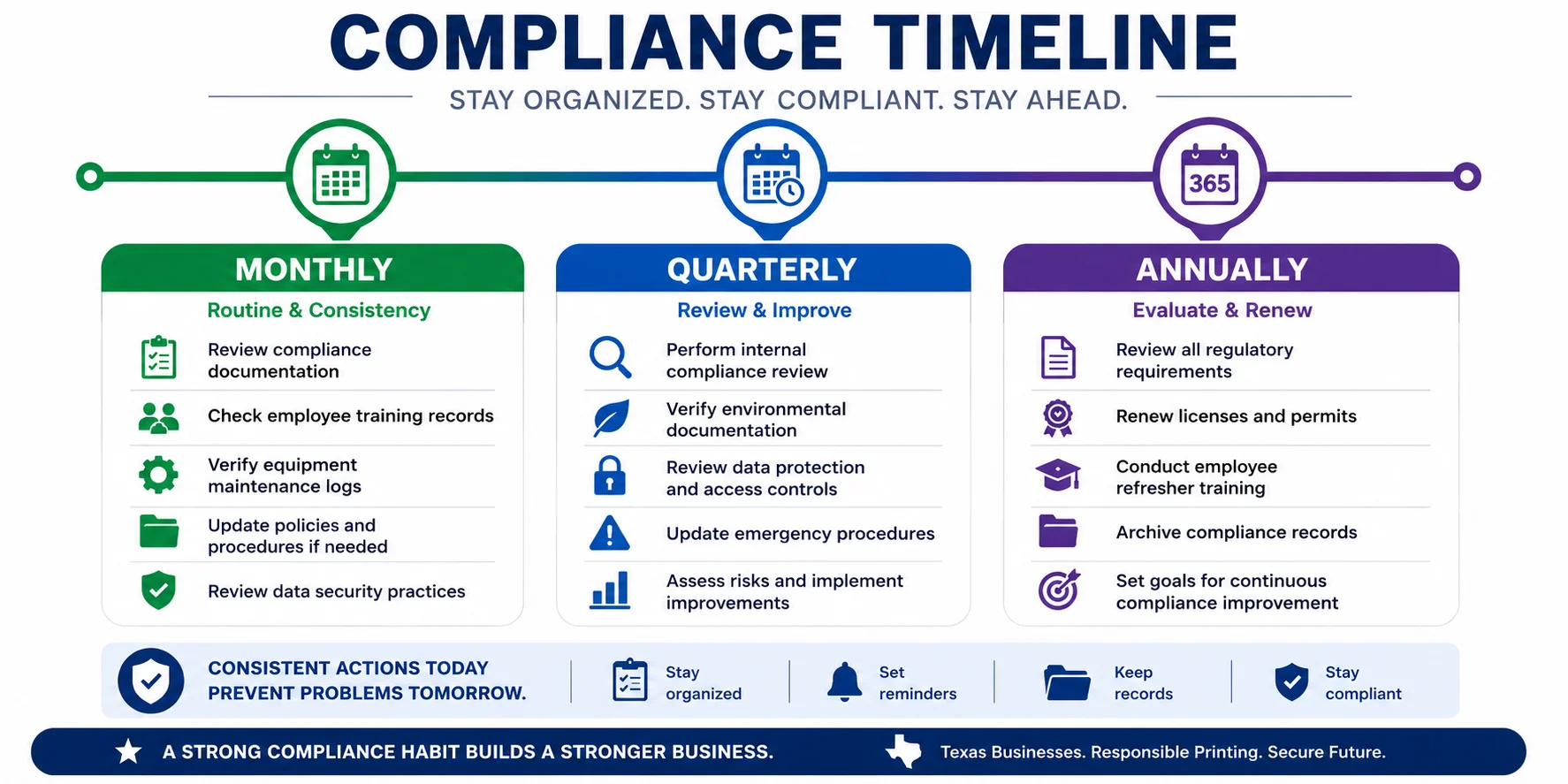
Beginner Timeline for Managing Compliance Deadlines
Instead of waiting until deadlines arrive, establish a simple annual compliance calendar.
Monthly
- Review documentation
- Check employee training records
- Verify equipment maintenance logs
- Update operational procedures if needed
Quarterly
- Perform an internal compliance review
- Verify environmental documentation
- Review customer data protection practices
- Update emergency procedures
Annually
- Review all regulatory requirements
- Renew licenses if applicable
- Conduct employee refresher training
- Archive previous compliance documentation
Maintaining this schedule helps prevent last-minute stress while improving overall organization.
Common Mistakes Beginners Should Avoid
Many first-time business owners unintentionally create compliance problems through simple oversights.
The most common mistakes include:
- Waiting until the deadline approaches.
- Failing to document completed tasks.
- Assuming regulations never change.
- Ignoring employee training.
- Using outdated compliance checklists.
- Forgetting digital security responsibilities.
Avoiding these mistakes significantly reduces compliance risks.
How Documentation Makes Compliance Easier
Documentation serves as evidence that your business follows required procedures.
Create folders for:
- Employee certifications
- Equipment inspections
- Waste disposal records
- Vendor agreements
- Safety training
- Incident reports
- Compliance checklists
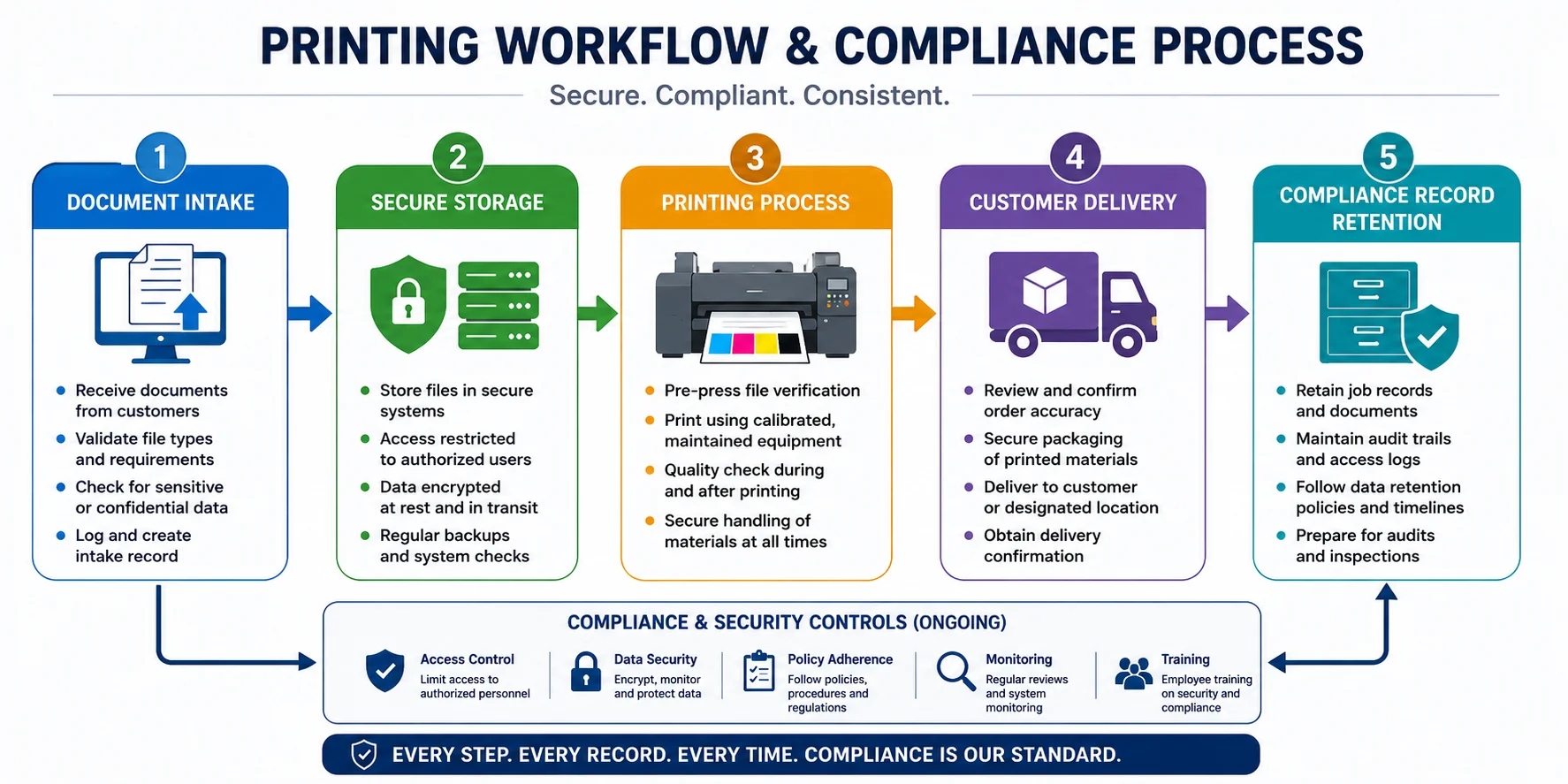
Cloud storage combined with secure backups makes retrieving documentation much easier during inspections or audits.
Cybersecurity and Printing Businesses
Today’s printing companies often store customer files digitally. Artwork, invoices, contracts, and payment information all require protection.
Cybersecurity should be a component of your compliance strategy, regardless of the size of your company.
Many beginners are surprised to learn that Texas regulatory mandates cybersecurity compliance last 90 days. Discussions often encourage organizations to review their security posture regularly instead of treating compliance as a one-time project.
Simple cybersecurity practices include:
- Strong passwords
- Multi-factor authentication
- Regular software updates
- Secure backups
- Employee awareness training
- Limited access to sensitive files
These habits reduce security risks while supporting broader compliance efforts.
Read more: What are Cyber Security Services
How New Regulations May Affect Printing Businesses
As technology changes, regulations increasingly focus on digital information management alongside traditional operational requirements.
Business owners should monitor updates regarding new cybersecurity regulations and Texas government compliance deadlines because printing companies frequently handle sensitive customer information in electronic formats.
Businesses can get ready before new deadlines become critical by staying informed.
Building a Beginner Compliance Checklist
Creating a checklist simplifies ongoing compliance.
Your checklist should include:
Business Operations
- Review permits
- Verify licenses
- Maintain equipment
- Update policies
Employee Responsibilities
- Safety training
- Policy acknowledgment
- Emergency procedures
- Equipment certification
Documentation
- Inspection records
- Maintenance logs
- Vendor documentation
- Compliance reports
Information Security
- Backup verification
- Password reviews
- Access permissions
- Software updates
Review the checklist every month to keep it current.
Read more: AI Governance Business Context Strategic Visibility
When Professional Guidance Helps
Some businesses eventually need expert assistance, especially as operations grow.
Working with a qualified cybersecurity consulting company can help identify vulnerabilities, strengthen policies, and simplify regulatory preparation without overwhelming internal staff.
Likewise, organizations operating in larger metropolitan areas may seek specialized expertise related to data security Dallas requirements or implement cloud security services Dallas to better protect customer files stored online.
Professional guidance should complement, not replace, internal compliance practices.
Practical Tips for Staying Ahead of Deadlines
Success comes from consistency rather than complexity.
Follow these practical recommendations:
- Assign one person to oversee compliance.
- Use calendar reminders for important deadlines.
- Keep digital and printed copies of key records.
- Schedule quarterly internal reviews.
- Update procedures after operational changes.
- Train new employees immediately.
- Conduct annual policy reviews.
- Monitor regulatory announcements from trusted sources.
Small improvements made consistently produce stronger long-term compliance results.
Final Thoughts
Understanding Texas’s new printing regulations compliance deadlines may seem intimidating at first, but beginners can succeed by focusing on organization, documentation, and consistency. Start with a simple compliance calendar, maintain accurate records, train employees, and review your processes regularly. As your business expands, continue monitoring regulatory updates and strengthening both operational and digital security practices. By making compliance part of your everyday workflow instead of a last-minute task, you’ll reduce risk, improve efficiency, build customer confidence, and position your printing business for sustainable long-term success.
Frequently Asked Questions
1. What happens if I miss a compliance deadline?
Consequences vary depending on the specific regulation. Possible outcomes include fines, warnings, delayed permits, or increased regulatory scrutiny. Maintaining a compliance calendar helps reduce these risks.
2. Do small printing businesses need compliance procedures?
Yes. Business size does not eliminate the responsibility to follow applicable regulations. Simple documentation and routine reviews often meet many beginner needs.
3. How often should compliance records be reviewed?
A monthly review is a practical starting point, with more comprehensive quarterly and annual evaluations to ensure everything remains accurate and complete.
4. Is cybersecurity part of printing compliance?
Increasingly, yes. Businesses handling customer information should protect digital files using appropriate security controls alongside traditional operational compliance practices.
5. What is the easiest way to stay organized?
Use a standardized checklist, maintain digital records, schedule recurring calendar reminders, and regularly review policies with your team.
